























“I Haven’t Eaten for 2 Days”: Mirabai Chanu Reveals the Harsh Reality of Making Weight for Competition
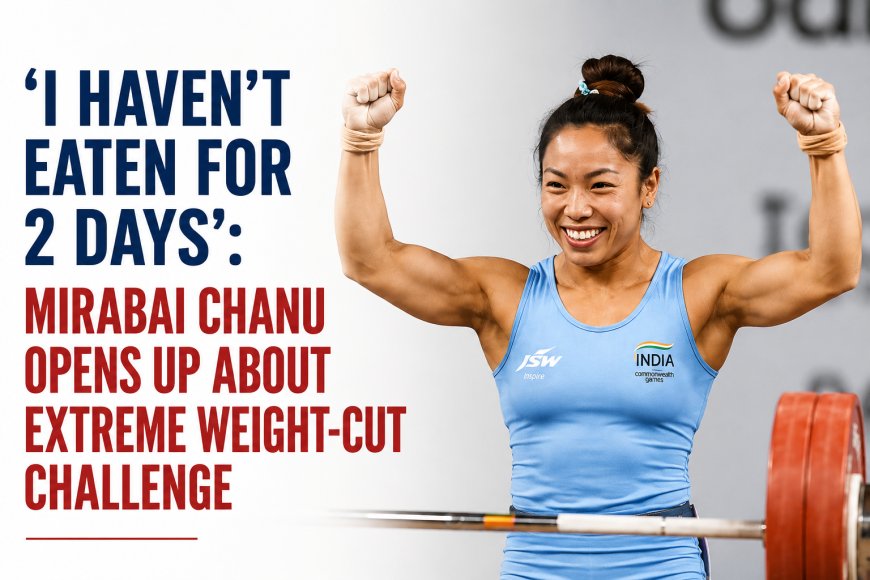
Olympic and Commonwealth Games champion Mirabai Chanu has opened up about the intense physical sacrifices she made to compete in the women's 48kg weightlifting category, revealing that she went two days without food and three days without drinking water to meet the required weight.
Speaking after winning her third consecutive Commonwealth Games gold medal, Mirabai admitted that managing her competition weight remains one of the toughest aspects of her career.
"Please do this quickly, I haven't eaten for two days," she said after her victory, before later explaining that she had stopped eating and drinking entirely in the final days before the weigh-in.
Mirabai revealed that her natural body weight is around 50.5kg, making the cut to 48kg particularly challenging. She explained that even losing an additional kilogram can demand extreme discipline and sacrifice.
Her comments also revive memories of wrestler Vinesh Phogat's heartbreaking disqualification at the Paris 2024 Olympics, where she missed the women's 50kg weight limit by just 100 grams, underlining how unforgiving weight-category sports can be.
Why Elite Athletes Cut Weight
According to medical experts, rapid weight cuts are highly specialised procedures designed only for elite athletes competing in weight-class sports. These methods are carried out under professional supervision with careful monitoring of hydration, nutrition, electrolyte balance, and recovery.
Experts stress that these practices are not intended for healthy weight loss and should never be copied by the general public.
Health Risks of Extreme Weight Cutting
Severe food and water restriction can place enormous stress on the body, leading to:
Dehydration and electrolyte imbalance
Muscle loss and reduced strength
Poor concentration and reduced athletic performance
Increased risk of cramps, dizziness, and heat-related illness
Slower metabolism after repeated cycles of extreme dieting
Most of the weight lost during rapid cuts comes from water and glycogen stores, not body fat. Athletes usually regain this weight immediately after official weigh-ins through carefully planned rehydration and nutrition.
The Safer Approach
Health professionals recommend gradual fat loss through balanced nutrition, regular exercise, and sustainable calorie control instead of rapid weight-cutting methods.
While elite athletes may use extreme strategies to meet competition requirements, experts warn that these practices can be dangerous without medical supervision and are unsuitable for the general public.
Bottom Line: Mirabai Chanu's experience highlights the extraordinary demands of elite sport. Although rapid weight cutting can be part of high-level competition, sustainable nutrition and healthy weight management remain the safest path for everyone else
What's Your Reaction?
 Like
0
Like
0
 Dislike
0
Dislike
0
 Love
0
Love
0
 Funny
0
Funny
0
 Angry
0
Angry
0
 Sad
0
Sad
0
 Wow
0
Wow
0